




In 2026, Yemen enters yet another year marked by deepening fragility, where conflict‑driven economic deterioration, displacement, and repeated climate‑related shocks continue to erode the resilience of families and communities. More than 22 million people, including 10.95 million women and girls, now require humanitarian assistance and protection services, a stark reflection of how profoundly daily life has been disrupted across the country. With 18.3 million people facing acute food insecurity, and essential services such as health, water, and sanitation operating at only a fraction of their capacity, households struggle to meet basic needs, let alone recover livelihoods or pursue economic stability. Amid these pressures, small businesses, long the backbone of Yemen’s local economies, are fighting to survive. As traditional coping mechanisms collapse and income sources dwindle, the need for renewed support to micro‑ and small‑enterprise owners is more urgent than ever. Strengthening these businesses is not only a pathway to income, dignity, and community recovery, but also a critical step toward restoring stability in a country where opportunity has become increasingly scarce.
Residents of Abyan Governorate face the same deepening hardships seen across Yemen. Families in Abyan are particularly vulnerable as economic decline and lack of local infrastructure make it increasingly difficult to earn an income or sustain small businesses. Ahmed is a young man who yearned for life. A high school graduate, his dreams collided with a harsh reality. “I graduated from high school and dreamed of a better future,” Ahmed says. “But the reality of our remote region and the lack of job opportunities or technical institutes left me unemployed. I felt helpless looking at my family of seven, whom I support.”
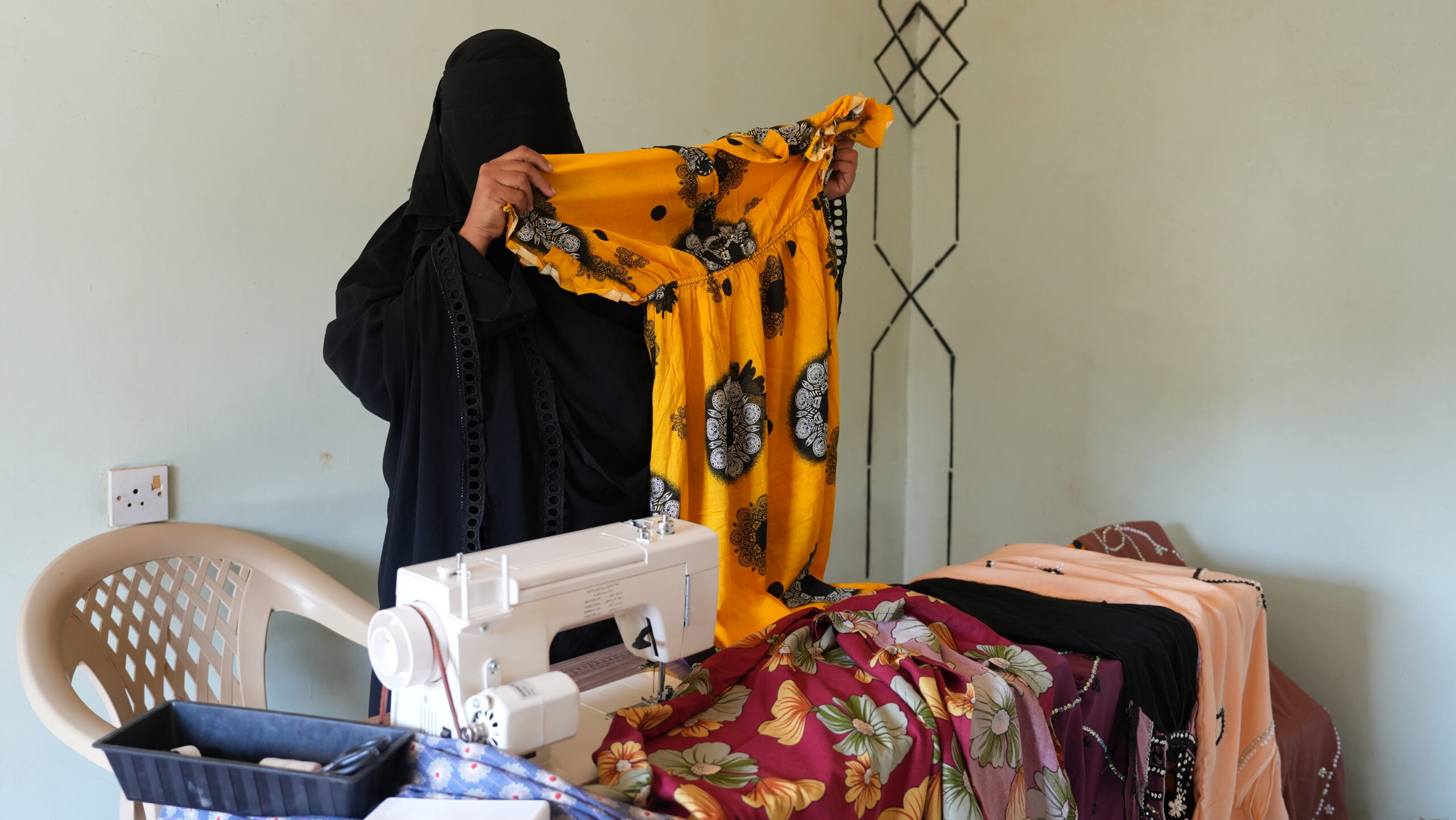
Amira, a widow and a mother of four, suffered from poverty, relying on the handouts of relatives and kind-hearted people. She possessed the skill and the love for tailoring but lacked the tools to turn this skill into a source of income. “I had the experience and the passion for tailoring,” Amira recounts with a heavy heart. “But I didn’t have the money to buy a sewing machine. I would look at my hands and wish they could change my children’s reality.”
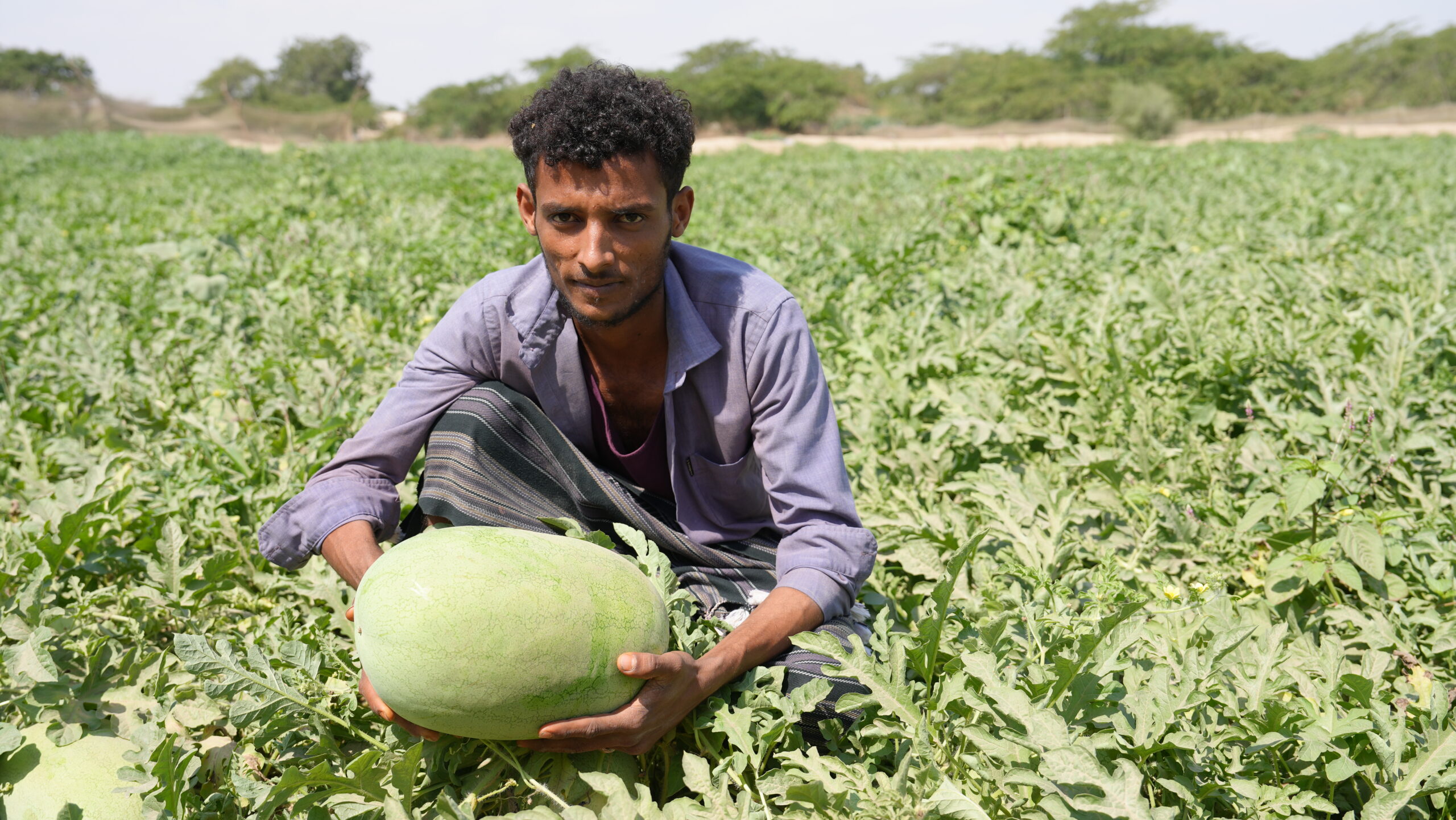
Mohammed Abdullah is not just a farmer; he is a son of the soil, forced by circumstances to abandon it. “I tried many times to farm my land but didn’t succeed due to lack of resources and the unavailability of machinery,” Mohammed says with regret. “This pushed me to work on others’ farms for a meager wage, while my own land lay fallow.”
With funding from the UK’s Foreign, Commonwealth & Development Office (FCDO), CARE implemented the Economic Development and Empowerment project as part of the consortium programme entitled “Building Resilience through Integrated Community-based and Humanitarian Systems Transformation and Leadership in Yemen (BRIGHTLY)”. Focusing on economic development and empowerment, the project provided specialized training in CARE’s small business management methodology, a marketing course, and a financial grant of 800 USD in Yemeni Rials for each of 180 participants in Khanfer and Ahwar districts in Abyan, enabling them to rebuild their lives and forge a dignified future for their families.
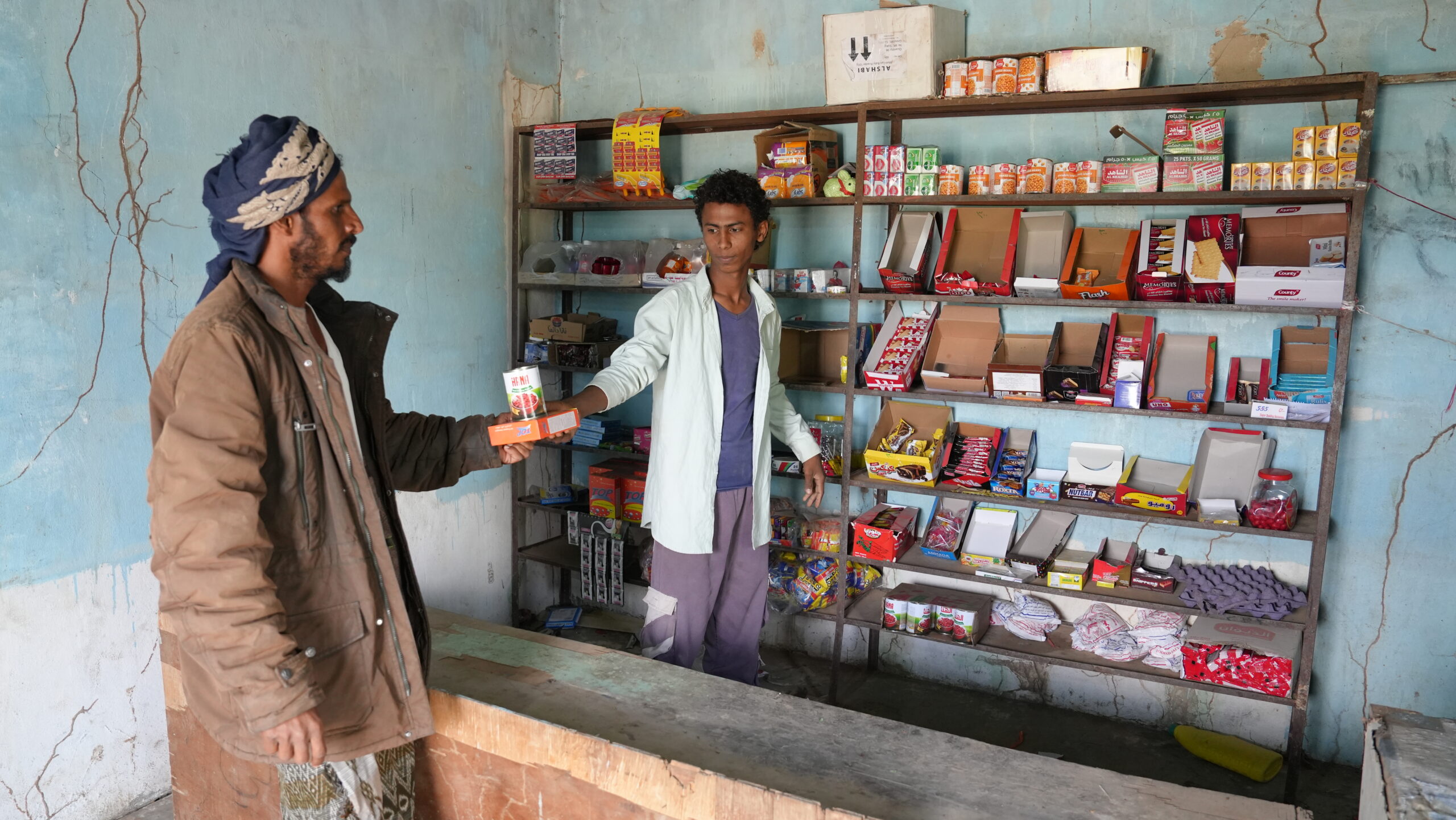
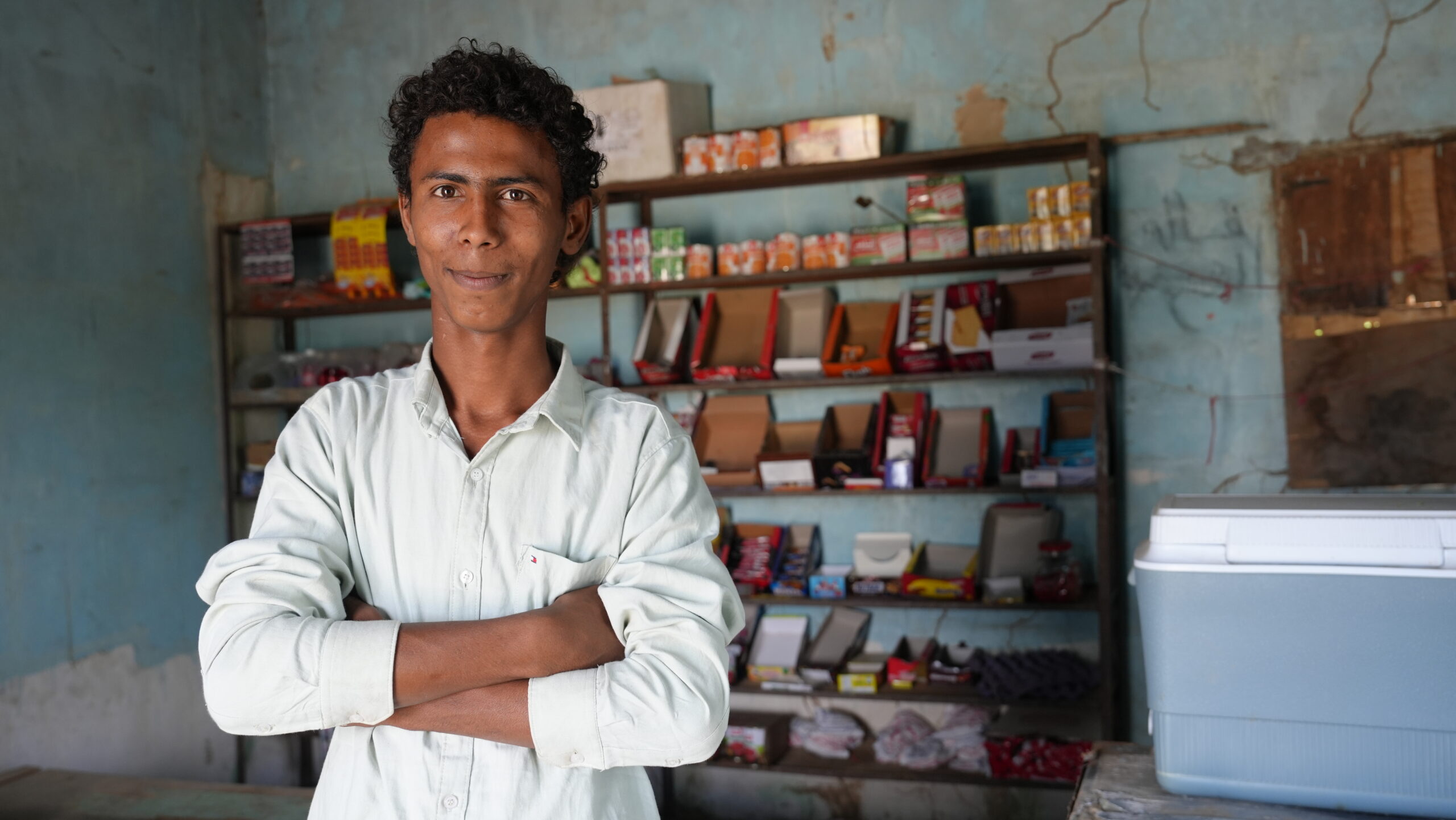
Joining the project was the turning point in Ahmed’s life. He underwent intensive training in CARE’s small business management methodology, in addition to a marketing course that opened new horizons for him. He learned how to prepare a feasibility study for his project. He received the financial grant and did not hesitate to invest the funds wisely; he started a grocery store. However, his ambition did not stop there. He bought a television to broadcast sports matches, turning his shop into a community hub for villagers and capitalizing on it to sell tea and drinks, which significantly increased his income.