
icon icon icon icon icon icon icon

Stories of Opportunities: How Small Chances Create Big Change

In the heart of the economic and social challenges facing Yemen, inspiring success stories emerge, demonstrating how targeted support can transform the lives of individuals and families. One such initiative is the Economic Development and Empowerment project implemented by CARE in Yemen, funded by the UK’s Foreign, Commonwealth & Development Office (FCDO). As part of the consortium programme entitled Building Resilience through Integrated Community-Based and Humanitarian Systems Transformation and Leadership in Yemen, the three governorates of Abyan, Marib, and Hadhramout were chosen to provide support towards empowering 100 community members through training courses in entrepreneurship and marketing. Following the completion of these courses, the participants were provided with grants equivalent to approximately US$800 in order to enable them to each establish their small business.

Among these beneficiaries, we highlight three success stories that reflect the positive impact of this project on their lives and more broadly, on their communities.
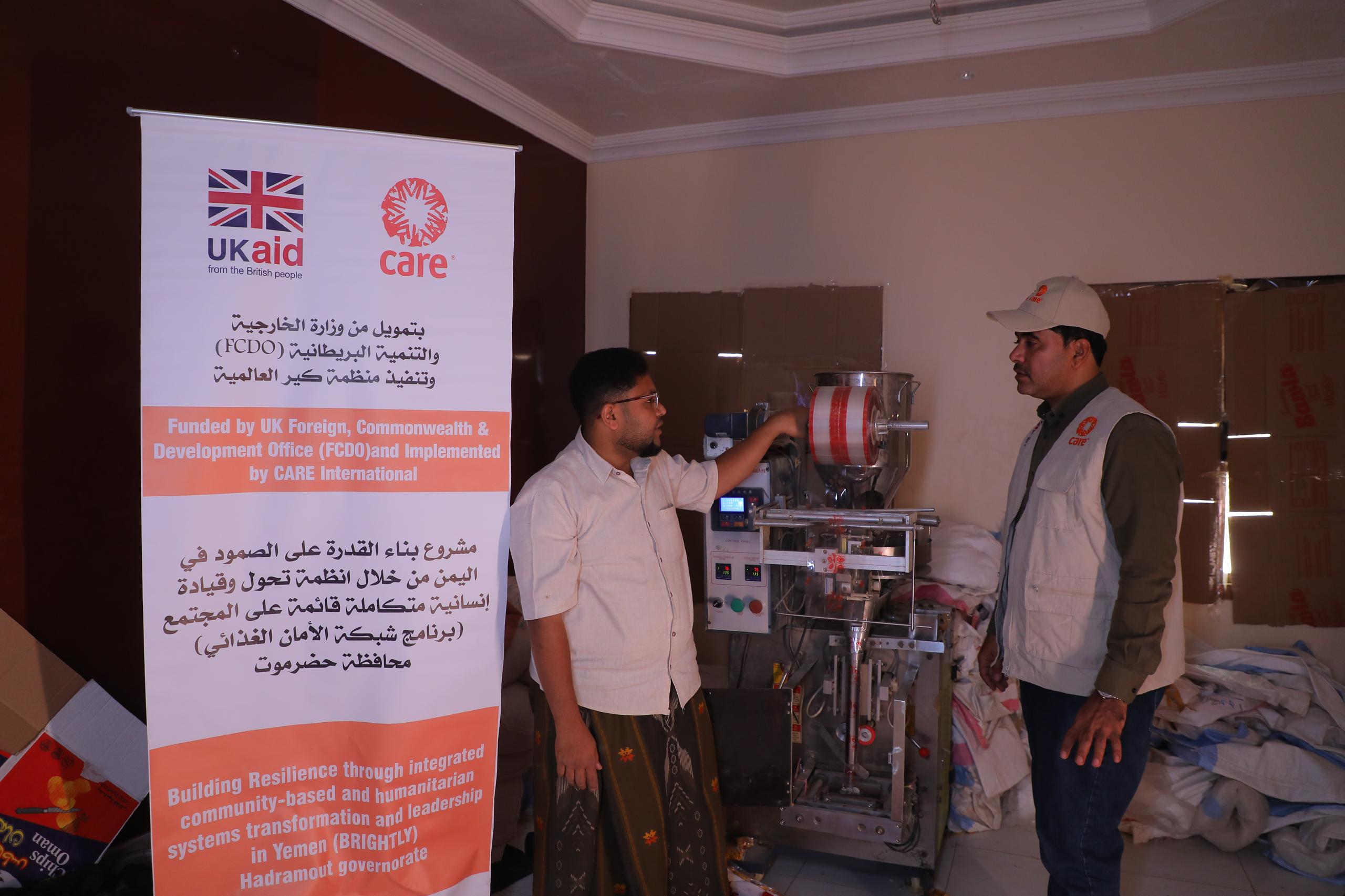
Fikri Khamis explains the production process in the project to a CARE staff, Hadhramout. Photo: Bassam Saleh/CARE

The Story of Fikri Khamis: From Unemployment to Entrepreneurship

Fikri Khamis, 39, who is from the rural areas of Mukalla in Hadhramout Governorate, faced significant livelihood challenges due to his unemployment. As a father of four, he sought an opportunity to secure a better future for his family. Fikri says, “I always dreamed of establishing my own business. While working in a spice shop, I realized the importance of adding value to food products. I thought of a project to package food items and nuts to attract more customers.”

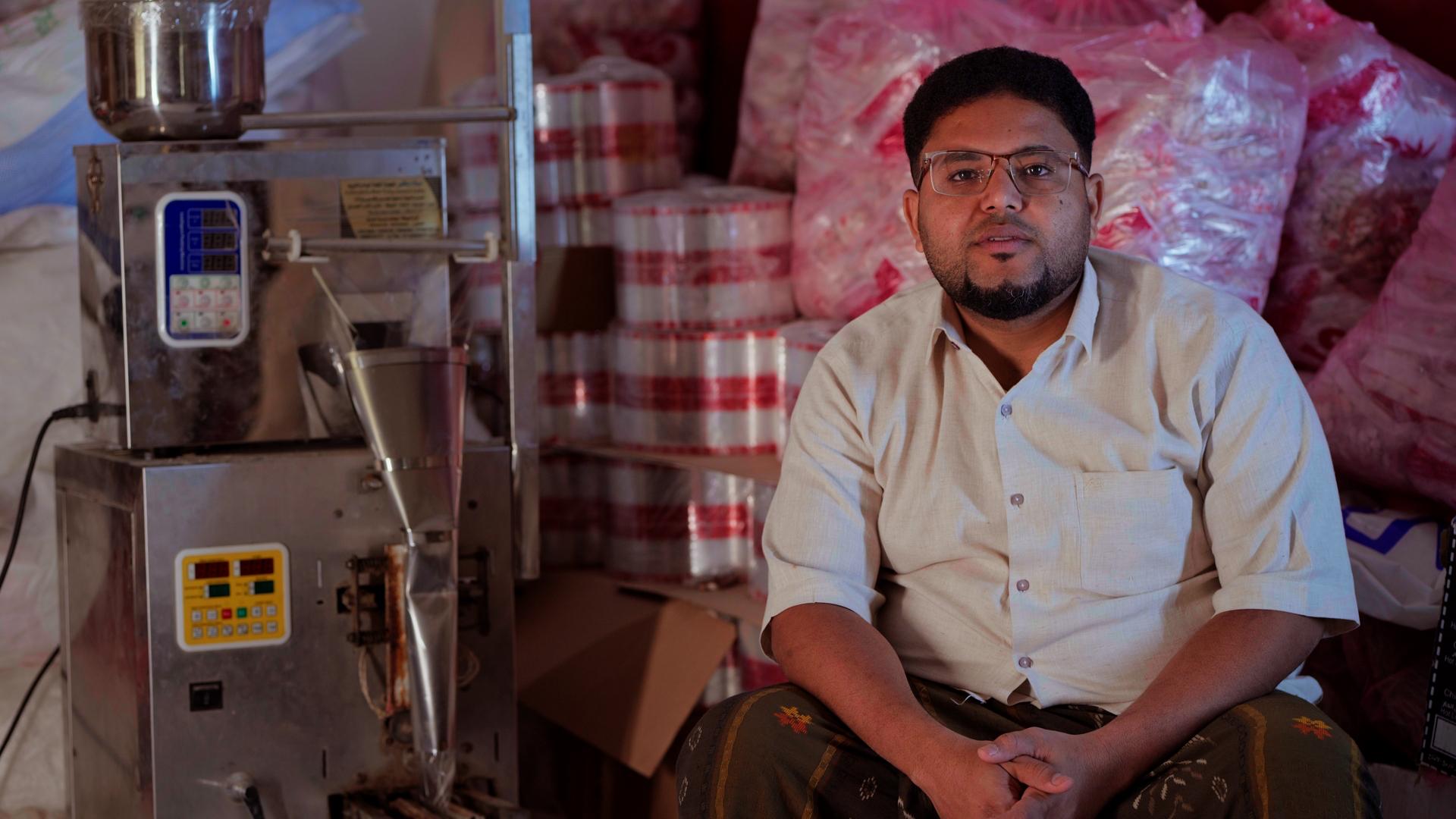
Fikri Khamis is the owner of the automated food packaging business in Hadhramout. Photo: Bassam Saleh/CARE

However, the main obstacle for Fikri was access to financing. When he learned about CARE’s project, he applied and was accepted. Fikri underwent intensive training in entrepreneurship and marketing, learning CARE’s methodology for establishing small businesses. Upon completion of the training, he received a financial grant equivalent to US$750.

‘Using the grant, I bought a packaging machine from China, purchased food items and nuts, and started production,’ says Fikri.  ‘From the very first day, I achieved good profits.’ Now, Fikri not only packages his own products but also provides packaging services to other local traders, placing their brand labels on the products. ‘The idea of adding value to products has helped local traders in our area to expand and sell their goods more effectively.’

Fikri now aspires to expand his project. ‘I plan to save part of the profits to purchase a new, larger-scale packaging production line.’

The Story of M. Salem: From Daily Wages to Financial Stability

Mohammed Salem, 42, from Mukalla, supports a family of eight. He has been working in the fisheries sector on a daily wage basis, but his income was insufficient to meet his family’s needs. ‘Job opportunities in our area are very weak, and unemployment is high,’ explains Mohammed. ‘I come from a poor family and did not complete my education, so I had to work for daily wages. This income was not enough.’

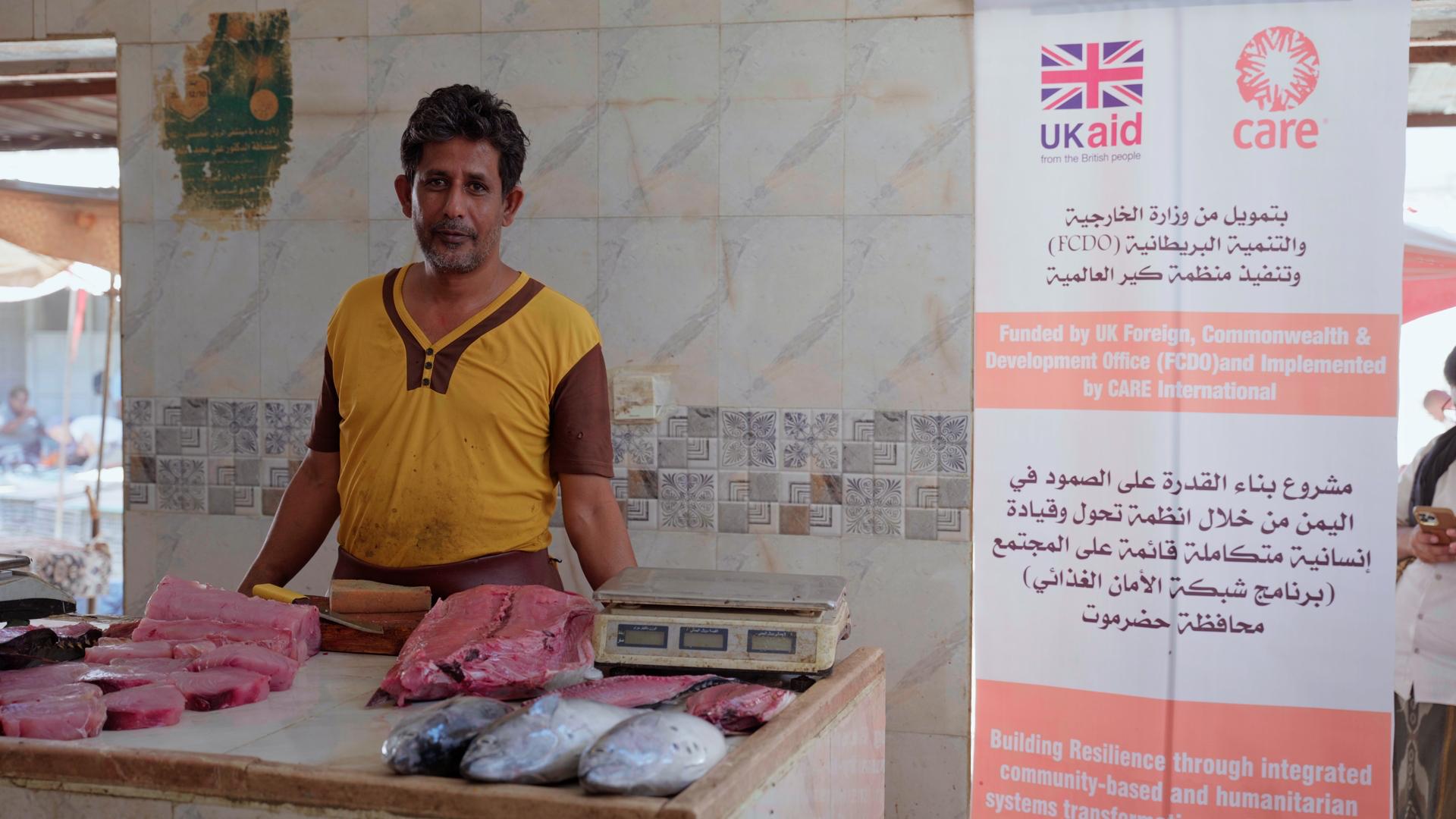
Mohammed Salem is the owner of a fish business in Hadhramout. Photo: Bassam Saleh/CARE

When he learned about CARE’s project, he saw it as an opportunity to change his situation. After receiving training in entrepreneurship and marketing, Mohammed formulated the idea of a small business selling fish. Using the financial grant, he rented a space in the central fish market in Mukalla and bought a quantity of fish to sell to customers.

‘I had some experience in fishing, but my financial circumstances did not allow me to start a small business. This funding made my dream come true.’ Within a short period, Mohammed’s business became profitable, and he now contracts with some restaurants to supply them with fresh fish.

‘The feeling of financial stability when you own a business that provides you with a daily income is wonderful. I’m very happy now,’ he says.

Naama’s Sewing Business

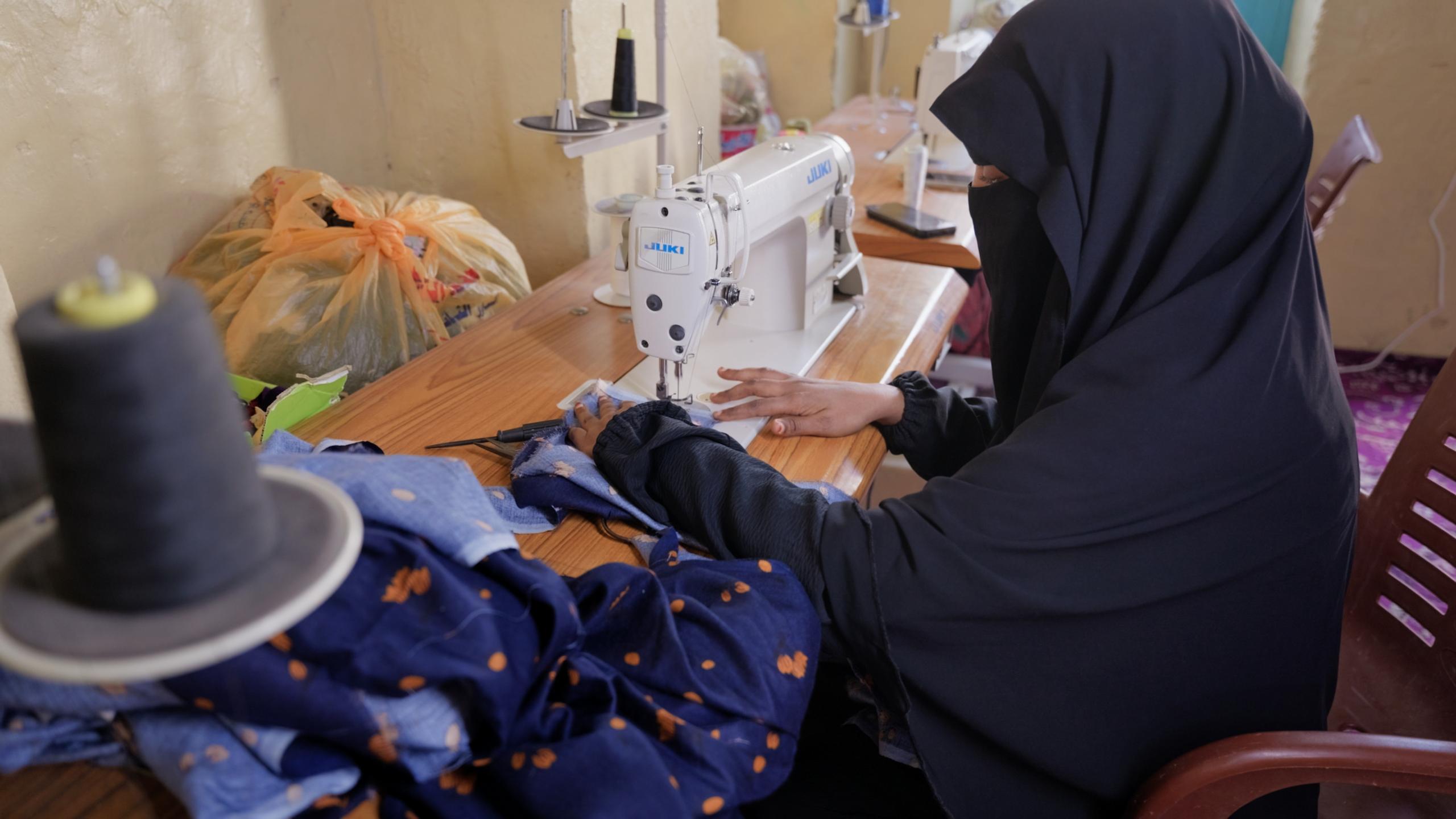
Naama Bakheet, 36, is a mother of three, from rural Mukalla. Over the years she has faced challenges finding work due to the high unemployment rate among both women and men in her area. ‘Being a woman makes my chances of finding a job in our region almost impossible,’ Naama says. ‘My husband works one or two days and then is unemployed, which affects our standard of living and the quality of our food. I thought about looking for work but did not succeed.’ When she heard about CARE’s project where selected community members were trained on how to start their own business, she applied and was accepted. During the training, she learned how to write a feasibility study for a business, create a marketing plan, and identify the type of business best suited for her. After the training, she received the financial grant that helped her kickstart the business.

‘I bought a sewing machine, a solar power system, and fabrics, and started working. My mother was an excellent seamstress, and I learned the art of sewing from her, so that’s how I thought of this business,’ she says. Thanks to her attractive designs and high-quality work, Naama succeeded in attracting many customers within a very short time. She used social media to market her products, which helped her overcome the barrier of reaching customers in remote areas. ‘Social media helped me achieve good profits despite the difficulty of accessing remote areas.’ Now, Naama uses traveling saleswomen to market and sell her products in neighboring villages.

These stories are among many examples of how economic development and empowerment can be effective tools in combating poverty and unemployment and building a better future for Yemen in a dignified manner.

Back to Top