





According to the Yemen Humanitarian Needs and Response Plan (HNRP) 2026, over 22 million people, nearly two‑thirds of the population, require humanitarian assistance and protection services. Among them, 18.3 million people are acutely food insecure, and more than 2.2 million children under five suffer from acute malnutrition, including over 516,000 cases of severe acute malnutrition (SAM). Economic deterioration, high inflation, and reduced livelihood opportunities continue to erode households’ ability to cope, particularly in rural and conflict‑affected governorates such as Taiz Governorate.
Fouad, a 56‑year‑old father, lives in the rural district of Al‑Mawaset in Taiz Governorate, where years of conflict, economic collapse, and shrinking livelihood opportunities have pushed families to the brink. He has spent much of his life struggling to secure the bare minimum for his family of six. A daily wage laborer, Fouad’s income was irregular and often insufficient, sometimes amounting to no more than USD 2 per day, leaving his household in a constant cycle of hunger, debt, and uncertainty.
Each morning, Fouad would leave his home before sunrise, carrying his tools in search of any available work, such as agricultural labor, digging, or even grave‑digging when no other option was available. His wife shared the burden, walking for hours each day between villages in search of food or small assistance, while leaving behind their children, including a three‑year‑old daughter living with paralysis. Their house, built with weak materials, offered little protection from the cold, rain, insects, and snakes; cracked walls and a dirt floor exacerbated their children’s illnesses and reflected the family’s extreme vulnerability. “If I find work, we eat today. If not, we sleep hungry and wonder what tomorrow will bring,” Fouad explains.
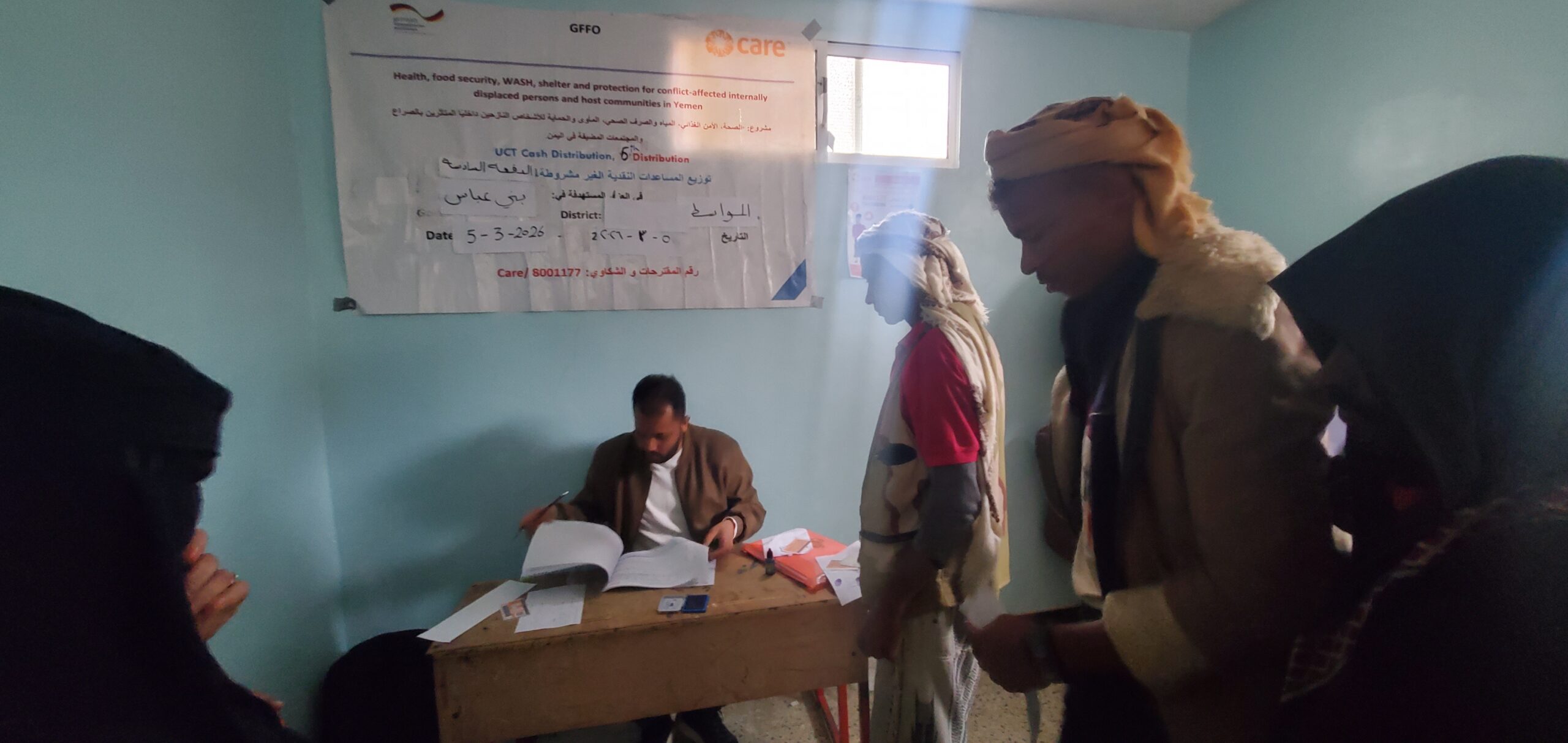
CARE, with funding from the German Federal Foreign Office (GFFO), implemented an unconditional cash transfer (UCT) program in Fouad’s village and surrounding areas. Fouad’s situation began to change when his family was selected and through community‑based targeting, his household was identified as meeting vulnerability criteria. He was then enrolled to receive seven monthly cash transfers, each amounting to approximately USD 90, over a seven‑month period.
The cash assistance gave Fouad the flexibility and dignity to prioritize his family’s most urgent needs. With the first transfers, the family secured basic food items, flour, rice, sugar, cooking oil, and gas, restoring a sense of food security they had not experienced in years. Importantly, they were also able to cover medical costs for their young daughter, ensuring continuity of care that had previously been out of reach.
As the assistance continued, the impact went beyond immediate survival. Fouad invested part of the cash to cement the floor of their home and seal wall cracks, significantly improving living conditions. This simple yet transformative improvement reduced exposure to cold, dampness, and pests and led to noticeable improvements in the children’s health. “This support was not just money,” Fouad says. “It gave us stability, safety, and hope that our lives can improve.”
Looking ahead, the family plans to use the final transfer to reinforce their roof, further protecting their home and restoring a sense of dignity and safety.
In rural districts like Al‑Mawaset, limited access to services, weak markets, and the high cost of transportation further compound vulnerability. Under these conditions, unconditional cash transfers remain a critical modality, enabling families to meet food, health, shelter, and other essential needs according to their own priorities while supporting local markets and preserving dignity.
Community feedback mechanisms and accessible complaints channels ensured transparency and accountability throughout the assistance process, reinforcing trust between affected communities and humanitarian actors.