






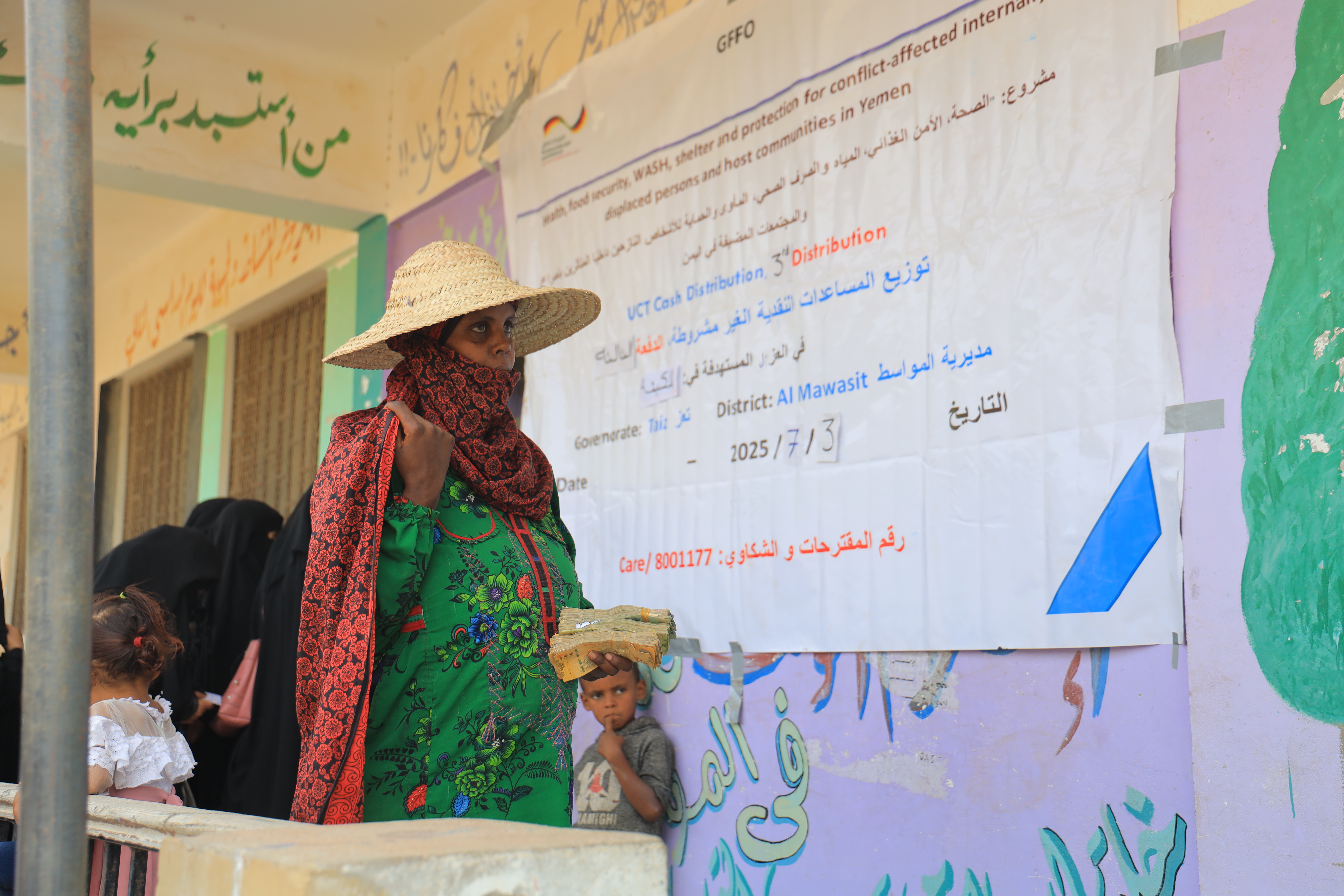
Yemen remains gripped by one of the world’s most devastating humanitarian crises. In 2025, an estimated 19.5 million people require humanitarian assistance and protection services, while nearly 17.1 million, almost half the population, suffer from acute food insecurity and urgently need support to survive. The situation is especially dire for women in rural areas, many of whom are widows, single mothers, or the sole caregivers for their families, facing immense hardship in meeting even their most basic needs.
Muhamasheen are one of Yemen’s most marginalized groups, long facing entrenched social and economic exclusion. Many families from this community live in overcrowded villages or informal settlements, with limited access to education, health services, or livelihood opportunities. Discrimination and poverty often force them into menial, low-paid, or irregular work, leaving families trapped in cycles of vulnerability.
Sameeha, 39-year-old mother, lives in Al-Makisha, a densely populated village in Al-Mawasit District, Taiz Governorate, home to around 750 families, including displaced persons and Muhamasheen households. Like many others, her family struggled daily due to the lack of steady income opportunities and the deteriorating economic situation caused by years of conflict.
As a housewife, Sameeha relied almost entirely on her husband’s occasional daily-wage labor. Her husband often worked carrying stones, making bricks from clay, or helping in local farms owned by other villagers. However, such opportunities were rare and unpredictable. “We often survived on what little people gave us, or on days when my husband could find work. Sometimes I had no choice but to collect firewood just to get by. Our situation was truly desperate,” says Sameeha, recalling how desperate her situation was.
Sameeha, pregnant with her third child and already caring for two young children, struggled constantly to meet her family’s basic needs. She describes their situation before receiving support as “zero upon zero,” highlighting the hopelessness and exhaustion of living in extreme poverty.
Against this backdrop, the introduction of cash assistance, funded by the German Federal Foreign Office (GFFO) and implemented by CARE, marked a turning point in the life of Sameeha.
Her life changed when she was enrolled in the second round of cash assistance. With the cash transfer, Sameeha was able to purchase essential food items such as flour, oil, rice, and spices, while also paying off debts that had accumulated over time.
“The cash support rescued us from our desperate situation and changed our lives for the better,” she says with relief. “After paying our debts and buying the basics, I can now think of giving my children vegetables and fruits, which I never dreamed of before.”
Cash assistance provided more than just financial relief for Sameeha. It gave her the ability to make choices for her family’s wellbeing. Instead of relying on irregular handouts or borrowing, she could finally decide what was most urgent and important for her household.
Sameeha’s story reflects the broader challenges faced by Yemen’s marginalized communities, but also demonstrates the powerful impact that flexible, dignified support like cash assistance can have. For families like hers, it is not just aid, it is a lifeline that helps them withstand the crisis, reclaim their dignity, and dream of a better future for their children.